|
You are here: Marine Templates and Tutorials > Marine Hull Template > Modelling Marine Vessel > Propeller Performance
|
Propeller Performance
The propeller generates a thrust that moves the ship/ vessel forward overcoming the resistance offered by the fluid. The simulations are performed for self-propelled conditions, where the propelling of the vessel is caused only by the propeller. There are no additional forces or moments on the vessel, such as those caused by a towing bar or hawser.
In the Steady-state, force balance in self-propulsion requires that,

|
8.13 |
where

|
Offered Resistance |

|
Thrust required to overcome the resistance |
Advance ratio
The advance ratio of a propeller is defined as:

|
8.14 |
when it is exposed to a water speed,  .
.  and
and  are the speed and the diameter of the propeller respectively.
KT, KQ curves
A propeller can be characterized by two non-dimensional parameters which are both functions of the advance coefficient  . They are
  - thrust coefficient and
  -torque coefficient, given by the following expressions:

|
8.15 |

|
8.16 |
Typically, the performance of a propeller is illustrated through curves of  and
and  against
  , as shown below:
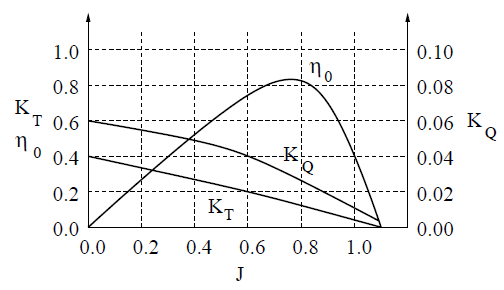
Figure 8.16 - Performance curves1Source: mit.edu, Maneuvering and Control of Surface and Underwater Vehicles