|
You are here: Marine Templates and Tutorials > Marine Hull Template > Modelling Marine Vessel > Ship Motions
|
Ship Motions
Motion of a body is generally expressed through their degrees of freedom (DOFs). Marine vessels experience oscillatory motion in all six degrees of freedom, as they advance in the positive x-direction.They can be classified into linear and translational motions as shown below.
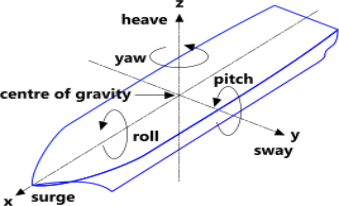
Figure 8.10 - Ship motions1Source:http://www.calqlata.com/productpages/00059-help.html
Linear Motion
- Heave: Vertical motion of the vessel along the vertical Z axis(up-down). Excessive heave in the downward direction leads to flooding of the ship.
- Sway: Lateral motion along the transverse Y axis (side-side or port-starboard). Sway can be caused due to wind, air currents or inertia of the vessel while changing course or turning.
- Surge: Longitudinal motion along the longitudinal X axis(front-back or bow-stern).
Rotational Motion
- Pitch: Upward or downward rotation of a vessel around the longitudinal Y axis. An offset from the longitudinal axis that causes a difference between the forward and the aft draft is called the trim. The angle made with the longitudinal Y axis due to the pitching motion is called the pitch angle.
- Roll: Tilting rotation of a vessel around the transverse X-axis. An offset from the transverse axis is called the list or heel.
- Yaw: Turning rotation of a vessel about its vertical Z axis.