Operating Parameters
The operating parameters pertaining to the Gerotor template involve the time definition for the simulation, pump configuration, angular velocity definitions for pump rotation and other advanced/extended settings (see Figure 6.96).
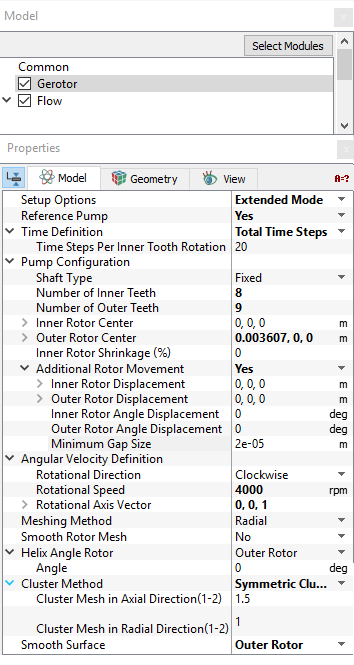
Figure 6.96 - Gerotor model-Operating parameters
Time Definition
This provides the following ways to specify the size and number of time steps for the gerotor pump simulation (see Figure 6.96):
- Revolutions: A single revolution corresponds to a pump rotation of 360 degrees. The parameters required under this Time Definition are:
- Number of Revolutions: The number of pump revolutions to be simulated.
- Time Steps Per Inner Tooth Rotation: The number of time steps taken to move the inner tooth through one pocket (angle between the tips of two inner rotor teeth).
The magnitude of the time-step size (s) and the angle of rotation (deg) depend on the Time Steps Per Inner Tooth Rotation and the Number of Inner Teeth as follows:

|
|

|
For a Time Definition of Revolutions, the Number of Time Steps is computed as follows:

|
- Number of Pockets: The amount of rotation based on the angle between two inner teeth.
- Time Steps Per Inner Tooth Rotation
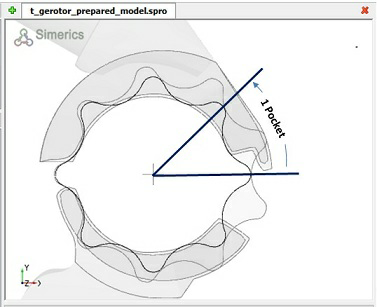
Figure 6.97 - Pocket-Gerotor
For a Time Definition of Pockets, the Number of Time Steps is computed as follows:

|
- Time Steps Per Inner Tooth Rotation
- Number of Time Steps (in the Simulation Panel)
For a Time Definition of Total Time Steps, the Simulation Time (Duration) is computed as follows:
 |
|
Note:
|
Pump Configuration
This contains parameters pertaining to the geometry of the gerotor pump (see Figure 6.96). The inputs such as Number of Inner Teeth, Number of Outer Teeth, Inner Rotor Center and Outer Rotor Center are same as those defined in the mesher.
- Shaft type: The template supports two different shaft types: Fixed and Orbiting.
- Inner Rotor Shrinkage (%): Enables to shrink the inner rotor size in terms of percentage. This is used to see the effects of increased tip clearance. Figure 6.98 shows an example of shrinking the inner rotor size by 10%. Negative values of Inner Rotor Shrinkage (%) are specified to increase the size of the inner rotor.
- Additional Rotor Movement: This specifies displacement of the center of rotation for either the Inner Rotor or the Outer Rotor. This feature is used to specify an orbiting motion or simply displace the rotor laterally. Both the Inner Rotor and the Outer Rotor can be prescribed a displacement using the following parameters:
- Inner Rotor Displacement: The translational offset of the center of rotation of the inner rotor.
- Outer Rotor Displacement: The translational offset of the center of rotation of the outer rotor.
- Inner Rotor Angle Displacement: The rotational offset of the center of rotation of the inner rotor.
- Outer Rotor Angle Displacement: The rotational offset of the center of rotation of the outer rotor.
- Minimum Gap Size: This ensures that the inner rotor and outer rotor do not overlap. It limits the clearance between the inner rotor and outer rotor.
Note: The displacements must be set very precisely when accounting for tight clearances. These displacements can be defined as a function of time using Expression Editor.
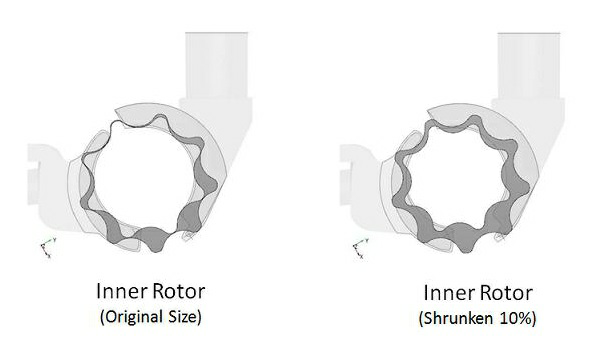
Figure 6.98 - Inner Rotor Shrinkage (%)
|
Note: The Inner Rotor Shrinkage (%) can be specified only once after opening Simerics-MP+. Once a non-zero value has been set, the program must be closed and reopened before any new value will take effect. For example, setting Inner Rotor Shrinkage (%) to 10%, starting a simulation, stopping the simulation, resettingInner Rotor Shrinkage (%) to 0, and then restarting from Initial Conditions will not restore the inner rotor to its original size. |
Angular Velocity Definition
This contains parameters pertaining to the rotation of the pump. The parameters defined under the Angular Velocity Definition are: Rotational Direction, Rotational Speed and Rotational Axis Vector (see Figure 6.96).
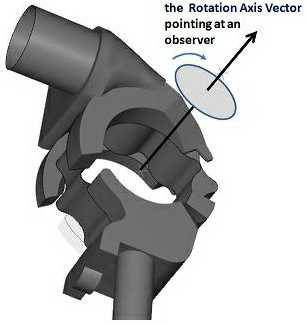
Figure 6.99 - Angular velocity definition
|
Note: A variable Rotational Speed can be specified using the Expression Editor. |
Cluster Method
This method controls the axial and radial grid distribution in the inner and outer rotor using the following methods:
- Original Distribution gives a uniform cell spacing.
- Symmetric Clustering(1-2) stretches the mesh towards or away from the top and bottom of the inner rotor and outer rotor in the axial direction depending on the value entered for Cluster Mesh in Axial Direction(1-2). The values entered must be between 1.0 and 2.0.
- Symmetric Clustering(1-2) stretches the mesh towards or away from the rotor centers of the inner rotor and outer rotor in the radial direction depending on the value entered for Cluster Mesh in Radial Direction(1-2). The values entered must be between 1.0 and 2.0.
Smooth Surface
This allows to determine which mesh among the Inner Rotor or Outer Rotor is allowed to deform as one mesh surface slides over the other. The rotor surface with the least convolutions (protuberances, inclusions, etc.) is usually chosen as the smooth surface and the surface mesh here will be allowed to deform. This allows the other surface to retain its characteristic shape to provide a realistic simulation.
The other parameters Meshing Method, Smooth Rotor Mesh and Helix Angle Rotor are the same as defined in the gerotor mesher.